Monday, April 4, 2022

Treading lightly?

The Guardian reported in March 2022 that the human project to turn the planet into a toxic barren mess is well under way. A chemical in tyres is reported to be linked with Salmon deaths in the USA and the same chemical is now being found in Queensland Australia. 


We really all need to be aware that 4WD culture has an impact. Whether it's cars on beaches crushing ecosystems, erosion of soils on bush tracks, fossil fuel use contributing to warming and chemical contamination of precious wild places. 

The richest 10% of humans are causing 40% of emissions. We must do better. 

Saturday, August 14, 2021

Tasmanian Salmon - Deserves a Gold medal for 'green washing'

Richard Flanagan is a wonderful writer. When he turns his attention to non fiction the results are extraordinary. 

I'm 100 pages into his book Toxic the rotting under belly of the Tasmanian Salmon  Industry and I feel gut punched.

The list of issues with this industry is long. The environmental, social, financial and health consequences are so shocking.

Some of these issues:

  • Salmon pens are creating biological dead zones around them because of enormous amounts of fish and food pellet waste
  • 1.7kg of fish meal creates 1 kg of salmon. We'd be better off eating the original sardines that make up the fish food/meal
  • Fish are feed fishmeal that comes from depleting international fishstocks
  • Fish meal contains additives that prevent combustion (catching fire) and are toxic
  • Fish food contains ground up factory farmed chickens and other livestock (and plastic and metal rubbish)
  • Because farmed fish aren't eating seafood their flesh is grey so they are fed colouring additives which are also toxic
  • Farmed Salmon has very small amounts of omega 3 as they are not eating a natural diet
  • Soy beans are a large proportion fish feed pellets and are contributing to the deforestation of South America.
The other consideration is that these majestic animals are being tortured. They swim in filth with not enough oxygen and must have miserable lives that results in lots of premature death.

And just when it seems it couldn't get worse guess what. It does. This nutrient overloaded ecosystem is creating jellyfish population explosions and this is not good as they wipe out lots of native species.

On and on. The other victim of this industry is the fur seal. They are smart animals that like to eat fish. They are an endangered species but salmon farmers don't care or share. So they kill, scare or relocate them on a very large scale.

The Tasmanian Government, past and present, appear corrupt in the regulation of this industry. 

Tasmania's reputation as green and clean is a joke.

Tuesday, January 14, 2020

Bushfire Crisis

The air is currently filled with smoke from the incineration of ecosystems and all their living components. It feels dire in Eastern Australia. The warnings of climate collapse have gone unanswered for decades by people with power and influence. The feeling of doom and helplessness is strong.

What to do?

1. Activism- tell politicians that they need to take this seriously.
2. Reduce your carbon foot print. Transport, heating and meat production are major contributors to co2 emissions. Change your behaviour: 
  • Grow more of your own food
  • Use less electricity
  • Fly less
  • Drive less
  • Get Solar
  • Eat no or less meat
  • Don't buy food that is out of season or gets transported large distances
  • Buy less things made out of plastic and other materials that will end up as toxic rubbishy when you are done with it.
3. Support efforts to 'sink' and store carbon:
  • Protect forests from logging
  • Support the move away from fossil fuels like coal and LPG
  • Plant trees
  • Critically consider if farming practices that use grasslands to graze animals for meat are really helping

Wednesday, January 2, 2019

Silver Wattles

Every year I observe something that thrives in the presenting conditions. This year the outstanding thriver award goes to the Silver Wattle Acacia dealbata.
These trees are very common in my area. The literature reports the seed and gum were an important Aboriginal food before the land was stolen from them.
Silver Wattle blossom and Sulphur Crested Cockatoos
I have never seen such a vibrant flowering and then prolific seed set. I have a theory why this is so.... We had a dry winter and early spring which saw the wattles have a good long flowering and pollination. The opposite happened for my cherry trees that were flowering during a wet and cold mid - late spring period that saw poor pollination and fruiting.

So the wattles flowers turned to seed pods and we then had lots of rain which has resulted in trees dripping in big full seed pods.
So the ground is covered in seed. Ants are probably squirrelling them away. Antechinus are chomping away hopefully. Birds including Crimson Rosellas and my chickens are eating a fair few also.
And this lovely creature appeared the other day ascending to escape the sun and heat that was on its preferred feeding tree, a long leaved box eucalyptus globoidea


Friday, December 14, 2018

Nest boxes for sale


I'm very pleased to announce that nest boxes are made and ready for purchase!
See me at the Daylesford Sunday Market or contact me via email to enquire how to order/buy your own nest box.

Small nest box for Feathertail Glider, Pygmy Possum and Antechinus
$25-$35 price varies depending on construction materials
(Box above $35 made from Marine plywood and recycled River Red Gum)

Large nest box for small Parrots
$45 - $55
(Box $45 above made from Pine plywood and Elm)


Large nest box for Sugar Gliders
                                                                         $45 - $55
(Box above $55 made from Marine plywood and recycled Rive Red Gum)


Medium nest box for Microbats
                                                                       $30 - $40
(Box above $40 made from Marine plywood)


Very large nest box for Brush Tail Possum 
$60- $70
(Box above $70 made from Marine plywood and Elm)


Thursday, November 29, 2018

Nestboxes better than nothing but not as good as the real thing

Preserving /conserving existing habitat and planting for future habitat is the most important thing for all of us to do/encourage or fund.

Gibbons and Lindenmayer (2002) estimate that:
83 mammal species
114 bird species
79 reptile species
27 amphibian species use hollows on mainland Australia. 
That's 303 species!

There just arn't enough hollows to go round. And as if that wasn't bad enough, introduced and feral pest animals also use hollows. For some creatures, they cant wait for governments to do the right thing and stop the clearing or degradation of habitat or for forest to regenerate.
Nestboxes are never as good as natural tree hollows but do provide an option to help create resting and breeding places.

There are many factors to consider when buying a nest box.

  • Which animal needs a box most?
  • Which animal is it designed for?
  • Where will it be located?
  • How long will it last?
I will help answer all these questions in future posts as my boxes are designed for species that need help. I will also explain the pros and cons of the materials I use.
David Lindenmayer has written about how nest boxes installed to offset habitat clearing to widen the Hume freeway didn't help threatened species.
http://www.nespthreatenedspecies.edu.au/news/offset-fails-to-tick-the-box
Nestboxes can help but real trees with real hollows are best.
While we wait 120 -150 years for trees to develop hollows put up some boxes now.

Microbat box (unsealed)
Feathertail glider/ Pygmy possum or Antechinus nest box (unsealed)

Monday, November 26, 2018

Wildlife boxes coming soon

Nest boxes for a range of species that could do with a helping hand will soon be available.

Nest boxes will be available for:
  • Possums
  • Gliders
  • Bats 
  • Birds
Boxes are:
  • Designed specifically for each species using best available evidence
  • Designed for maximum animal comfort
  • A range of materials used including Forestry Steward Council approved 17mm  ecoply, FSC 18mm  marine ply and/or recycled hardwood timber
More details and photos coming soon

Sunday, November 18, 2018

Bird orchids

It is late spring here in central Victoria on my 'bush block'. It's been a drier season than usual but not as dry as a lot of eastern Australia. We have had approx 30mm of rain this month. Most of it was a down pour over an hour or so of 22mm. So it is reasonably green.

Unlike many bush blocks in my area I don't graze, burn or slash the forest under-story. Where many people fear leaf litter and plant debris, considering it fuel that may imperil their life if an uncontrolled fire comes through, I see leaf litter and plant debris (bark, twigs and branches) as a vital component of biodiversity. Debris makes habitat and breaks down to create a soil ecosystem that feeds plants and animals and makes everything healthy.
Improving biodiversity with leaf litter
I have some magnificent patches of bird orchids at the moment. Thankfully the local grazers (feral and native) swamp wallabies, grey kangaroos and hares don't find them delicious.
Bird Orchid Chiloglottis valida
Taller Bird Orchid possibly Chiloglottis trapeziformis
Since 1970 humanity has wiped out 60% of mammals birds reptiles and fish.
(Living Planet Report - WWF)

I'm guardian to 6 acres of reasonably high quality forest. It really doesn't take a lot of effort to do no harm. My recipe:
  • I only use a small portion of it for my own home, garden and livestock (5 chickens).
  • Slow down water that moves across the landscape, this replenishes soil moisture and avoids erosion. I do this with earth barriers or logs and debri.
  • Allow habitat corridors so that animals can move freely across the landscape.
  • Leave lots of logs and fallen branches to become homes for bugs and other larger creatures
  • Be a good host. Provide water bowls for birds. Don't use barb wire fences that bats, possums, kangaroos and wallabies can get entangled in.
  • Avoid using pesticides and herbicides that can impact through the ecosystem in damaging ways.
I have about 12 very old trees, I'd guess 100- 200 years old that are full of hollows used by a variety of animals. The noisiest and most notable are sulphur crested cockatoos, corellas, kookaburra, possums and ducks. These trees are mostly in decline with replacements still 50-150 years away.

Some other lovely things...
Native Bluebell Wahlenbergia sp

Flowering native Milkmaid lilies Burchardia sp

Monday, August 27, 2018

(Tooth) Paste Waste

Alot of products have an MO (modus operandi ) of convincing us they have a solution to our problems. Often they invent the problem to begin with... looking at you bottled water industry.

Toothpaste.... I've always used it habitually... but I'm fed up with the packaging which includes a cardboard box,  a plastic tube and a lid which always goes into landfill. I brush twice a day EVERY day. Thats alot of paste waste.

So after researching alternatives to tooth paste I realised I dont need a paste substitute, I need to stop using paste! Brushing does a great job on its own. So if you can't make me a product that doesn't harm the environment  I don't want it.

Wednesday, February 7, 2018

Reflections from Indonesia

Im back in Bali. Im here mostly to see my Mum but its always interesting to observe environments different to home. I'm prone to do more self reflection when away from my home and daily habits.

I use this blog to explore and consider environmental issues. Within the hierachy of structural forces causing suffering, injustice and destruction to living beings, including sexism, racism, homophobia and other structures of oppression it is how humans are destroying the natural world that pains me enormously. The natural world can not fight back against bull dozers, chainsaws, murder, poison, pollution and garbage.

For reasons mostly to do with privacy i dont tend to talk about other things i feel passionate about or are personal... have tried to avoid this being a confessional. I cringe at the thought of over sharing.... but here goes any way.

I recently came across the blog of Elissa Altman titled Poor mans feast. Its an absorbing beautifully articulate series of stories about her life. I particulary like the way she writes about her deep love for her family especially her female partner. Shes not shy in her breadth of topics.

If  I was a writer id like to imagine I'd write with her emotional intelligence... i have a title. ...Lessons my mother never taught me' inspired by the reality that so much of what i know about life, relationships and myself has come from the agonisingly slow processes of the succeses and mistakes of my lived life.
At 50 I feel the tick tock of time ringing louder and I have much that i want to experience.

So back to the main theme of the environment. I  went to Gilli Meno again this year. T calls it Gilli Nemo because in part she loves to be silly and she knows i go to snorkel and gawk at the many fishes. My Mum has the adorable habit of calling it the Gillian Islands. Shes really is speaking 'double dutch'. Gilli means island in Indonesia so shes in essence saying island island.


With my feet up at Gilli Meno

To my great surprise things are changing regarding plastic rubbish. It seems the Balanese have stopped blaming the Javanese and vice versa for the problem. Locals everywhere have activated and are doing regular cleanups. While erosion is eating into the eatern side of the island the absence of plastic rubbish is heartening.


There are more bins around and the mesh contains the contents better

Drinking bottles as rubbish bins and building material

To reduce the number of water bottles, many warrungs offer to refill bottles with drinking water from the 10 litre reusable bottles.

Another solution of sorts was to use them as mini bins for other smaller pieces of plastic rubbish. My friend at the warrung explained that when full, they will be used to build a temple. Now to me that is devine!

My favorite use of plastic bottles is in the construction of hot houses. Using rubbish for functional structures is in my opinion obvious.


Wednesday, December 20, 2017

Hyacinth Orchids

I always find it extraordinary that as summer entrenches itself and the ground dries and hardens, and the leaf litter and debris crackles, up pops the Hyacinth Orchid Dipodium sp.

Hyacinth orchid

There are many different microclimates on my 6 acre dry sclerophyll forest site. Moist gullies, some grassy open forest and the dry north facing ridge slope. This last one is where the orchids are thriving at the moment. My drive way is lined by orchids at the moment, I see a delightful avenue of them as I drive in and out.
Driveway on northfacing dry forest slope

Most years the emerging shoots are nipped off by something. Probably Swamp wallabies and maybe Hares. The nips usually kill them but these have survived. These are near a wallaby track that crosses the road.
Pruned orchid with few flowers

Maybe we have a shortage of Wallabies or Hares and thus an abundance of orchids. It's always so hard to know what causes an observation.

There are the dark stemmed


And the light stemmed.


What I find fascinating is that these plants are saprophytic, which means that because they don't have  chlorophyll  they live symbiotically with a nearby Eucalyptus tree/s via mycorrhizal fungi. Very clever. They can not be cultivated. I can't tell you how extraordinary and reassuring I find it that there are some things humans can't manipulate.


Tuesday, February 14, 2017

Oceans of plastic


I have always been aware of the dangers of plastic to our natural world. I think most people dont think its got anything to do with them. But as with most change movements, those with influence and power need to be convinced by the actions of us the ordinary and average citizen.

I'm in Bali at the moment. It is never far from my mind and observation that we humans consume and pollute every where we go. Disposable packaging on the flight was every where. The prewrapped blanket, headphones gave way to the supplied lunch with sachets for this and that.

Where I'm staying the ubiquitous plastic bottles for drinking water are absent. The room has this nifty reusable 10 litre water vessel that sits on dispenser, providing hot and cold water.

The owners have also taken a position on A/C that is refreshing. People are billed for the power used to run the air conditioning. It means people dont leave it running unnecessarily.

I have lovely Dutch parents.  So I might be biased when it comes to the endeavours of Dutch people.
The Netherlands has an extraordinary history of land modification. Reclaiming land that was once covered in sea water and engineering the landscape so that it drains allowing for vast areas of food production. The dutch are in the fortunate position to have engineering solutions for global warming symptoms like extreme weather events and rising sea levels.

One Dutch man who has his sights further a field than Holland is Boyan Slat his campaign to clean up the plastic accumulating in the oceans is inspiring. Have a look at The ocean cleanup page and if you can contribute to their project.

Friday, February 10, 2017

Co2 levels and vegetation growth

On my bush block dominated by Eucalyptus trees, the canopies look the best I can ever remember. They are full of large glossy new leaves.

We had a very wet winter and spring, so much so that when we buried our cat, the hole that we dug, approx 60 cm down had very damp clay, and that was in the middle of summer. I think its fair to say that water plus CO2 allows plants to grow faster.

But nothing is ever straight forward. Im no scientist but am a very keen observer of my environment.
Im very curious about how the ever increasing levels of CO2 are contributing to vegetation growth.

An ABC report from 2010 talked about some negative side effects from increased vegetation growth as a result of increased atmospheric CO2.
  • Some plants increase that amount of toxins in their leaves to reduce palatability
  • Other plants reduce the amount of proteins in the leaves
For native fauna who rely on already fairly impoverished vegetation especially Koalas this might have really negative consequences.

Thursday, November 17, 2016

Koala and Sulphur Crested Cockatoos

A while ago I observed an interaction between a Koala  and a small flock of Sulphur Crested Cockatoos that Ive never seen or heard of before.
These Cockatoos were bullying or definately  harassing this Koala. It went on for more than an hour. The Koala tried to get away, moving up into the canopy of this Long leaf box, but had little room to move.
I concluded that it was a flock of rascals, maybe young Cockatoos, maybe not, at a loose end and flexing their intellectual superiority over this creature.

Tuesday, March 22, 2016

Plastic clothes - pros and cons

Plastic clothes are everywhere. I was disappointed to find that they contain hidden dangers.

Cons of plastic clothes
On the ABC program 'Catalyst' scientists revealed that they were finding plastic in fish. But not the high profile villans 'micro beads' but nylon and fibres found in clothing.

Fish samples taken near sewrage outlets had the highest  levels of plastic. So it seems that 7 billion people with 2/3 rds of their clothing being plastic is contributing considerable amounts of plastic pollution.

Ive always preferred cotton, linen and wool. But as I get older these fabrics have got harder to find and more expensive.

Pros of plastic clothes
Cheap. Plastic clothes are cheap. Particularly from some of the large department stores. But like cheap food the full cost of cheap clothes is picked up else where. The environment is usually the area that takes the hit. Pollution via toxicity or nutrification, leading to loss of biodiverstiy.

Polar fleece is convenient. Easy to wash comes in great colours and keeps you warm.

So what to do?
I will continue to buy cotton, linen and wool.  Buying second hand via op shops and ebay/gumtree etc reduces the production of plastic pollution.

Some thing else to consider is filtering the water that comes out of your washing machine.

Im now concerned that my grey water reed bed may not be dealing with my pollution in a environmentslly friendly way.


Friday, December 21, 2012

Yellow Tailed Black Cockatoo

Yellow-tailed Black Cockatoo | Calyptorhynchus funereus photo
Photo by David Cook
These are my favourite bird! They fly over frequently, always paired up and much less raucous than the other common parrot the Sulphur Crested Cockatoo.

So when I saw that a pair had made a nest behind my shed, and that it had a large chick in it, I gasped with delight! As I observed it later in the day I witnessed a number of interesting things:

  • when a crow flew into a tree near my chickens, the chickens sent out alarm cackles which set off the cockatoo chick who also squawked. I had no idea crows are considreed such threats.
  • I could see a ring tail possum tail sticking out of this same nest. Was it dead? Are they sharing? Is there such a shortage that a possum and cockatoo will share the same tree hollow? Later in the day the tail retreated into the hollow.

This dead branch has a nest for a pair of Yellow tailed black cockatoos
Those with some understanding of Australian fauna, know that many birds and mammals need tree hollows to make nests to reproduce and with tree clearing  accelerating around here, homelessness is not just a human problem.
Nest in the dead branch
Trees need about 100 years before hollows start to be formed, so if we keep cutting down the big ones its obvious what will happen.

On my 6 acre bush block which is nearly all forest, there are only around 30 trees old enough to have hollows. Like much of the Daylesford area, the area was cleared of forest for mining in the late 1800's.

This candlebark below has many hollows, Rosella's and possums are the current residents, with European wasps also calling it home.
Candlebark with many hollows
Many years ago I wanted to make nest boxes for Feather tailed gliders and possums, which I knew were here, and I put a a couple of these home made nest boxes up. The photo shows clearly why this is not the right way to attach a nest box.
How not to attach a nest box
The metal strapping that I nailed into the tree is hindering the growth of the tree and is creating a wound. Now I know that the nest box needs to be hung rather than attached.

Thursday, December 20, 2012

Plague soldier bettles

As any observer of the natural world knows every year brings different conditions and different booms and busts. I've been seeing creatures that I don't normally see. In spring it began with Plague soldier beetles, these ominously named insects weren't the trouble that you might think. The main problem they cause is the possible snapping of branches under their weight.

Plague soldier beetles massing
Beetles on the raspberries
I then found they were of considerable benfit for my ailling cherry tree that was under serious attack from black aphid. I had hoped that this year would be different as I gave the tree a good dose of Munash - rock dust, a local product that I think has created resilience and abundance in other plants similarly dosed.

Black aphids on Cherry tree
I suspect the cherry tree gets too much shade from an enormous messmate eucalyptus nearby. So  for a few years now the aphids sense its weakness and attack.

However the beetles eat aphids, so one plaguing creature consumed another. Nature is good that way. No waste in nature. No photos unfortunately.

The lady bird beetles come to the rescue eventually, but it can take time for the numbers to build. ABC's Gardening Australia says there are 100 species in Australia!

Adult and larvae Lady beetle in one shot

 There is a 28 spotted lady bird beetle that's not so useful for gardeners as it eats cabbage, bean and potato plants

Monday, November 12, 2012

The Mighty Murray

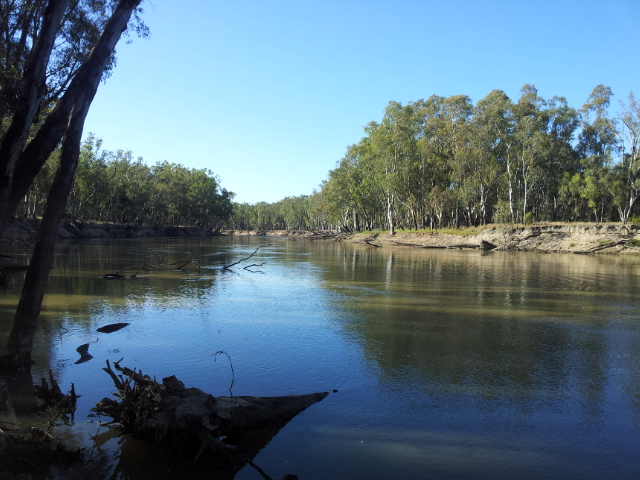
I love going up to the Murray. In this dry land with few water courses, the Murray stands out as a whopper.
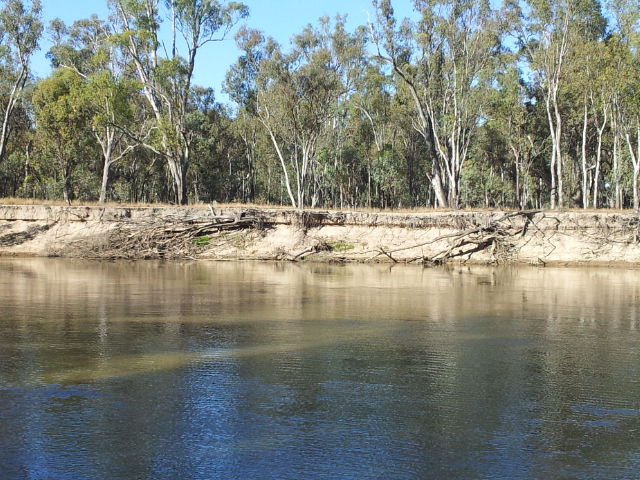
The Murray River near Barmah
The murky brown colour and the swift current are all a delight to me. Its familiar, reassuring and such a striking smorgasbord of life in what seems like a surrounding dry landscape that is being damaged and deforested at a rapid rate. The bird life was incredible, water birds of all sorts, endless amounts of parrots, Galahs and Sulphur Crested Cockatoos, Pelicans and Swallows .

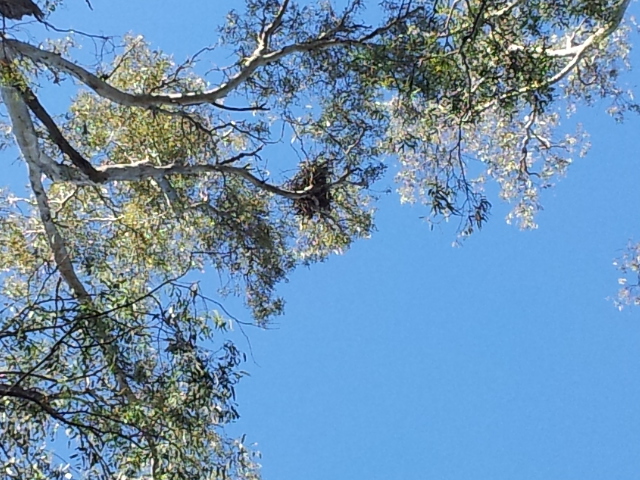
We unknowingly camped under the nest of a bird of prey, the parents came and went with various morsels for the chick. They didn't seem at all concerned about our presence. We found the remains of a fresh Galah head on the ground under this nest one morning, all edibles carefully extracted from the skull.

Raptor nest
The environment shows the wear and tear of human activity. The banks are all terribly eroded. Trees have their roots undermined and topple in. The speed boats going up and down in this section cause large waves that further erode the banks.
Eroded banks
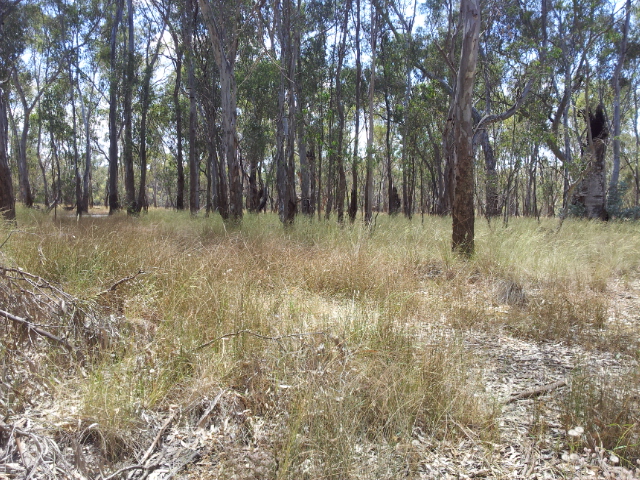
On the other hand floods in recent years means that the floodplain has been having a fairly 'normal' and healthy cycle. For the first time in a long time the native grasses are out numbering the weeds.
Native Poa thriving after floods
On the subject of introduced species, I paid my $6 for a 3 day fishing license and caught 1 carp. Which is exactly what I wanted to catch. I've been itching to cook up a carp for ages to find out what the bad eating reputation is based on. It was a fishy flavour (but it is a fish) with a rather soft and mushy texture, not unpleasant at all. I baked it in foil with slices of lime and salt (I forgot to bring garlic) but think frying fillets might be better... hope i catch another carp soon.

November is 'Movember', with the aim of promoting men's health and the entrance banners to the towns of BendiMO, ElMOre and Mochester (Rochester) were a hoot.

Monday, October 29, 2012

Taranaki Farm Tour

On Sunday T and I went to the lovely Taranaki Farm, which is a stones throw from Woodend.

I joined just a few other people...
Farm tour snakes towards the diary
Approximately 400 people (but  I find it hard to count crowds so it might have been more) came to see this farm on Sunday, they were mostly in their 30's to middle aged, with lots of children in tow.
One of the draw cards was Joel Salatin, a man famous for his enthusiasm for regenerative, sustainable agriculture that I think does a reasonable job of not making the lives of the animals that we eat an absolute misery.

Joel Salatin in fine form

Ben Falloon and his partner and staff, love their land obviously and they have invested a lot of money to create infrastructure and design elements that maximise the sustainability of their farm.

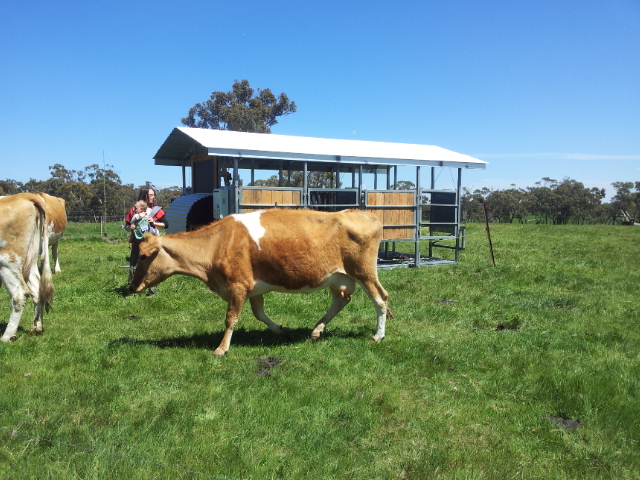
They bring the dairy 'parlour' to the cows. They have a small herd of 7 and have beautiful lush pasture with not an inkling of being over grazed. The practice of overgrazing on 'conventional' farms is a problem that drives me crazy. It does nothing good for the grazing animals, plants, soil or farmer profits.


Mobile dairy
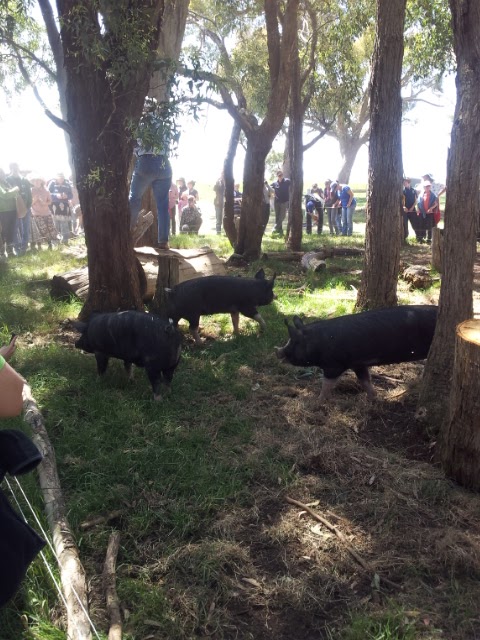
Moving livestock from small field/enclosure to new ground regularly is an important element for not trashing the landscape that provides food for their chickens, pigs and cows. Joel stated that these pigs below, would get 20% of their calories from the animals and plants in the soil in this area, but I find that hard to believe unless I am totally underestimating the insect life present.

Berkshire pigs amongst the Eucalyptus trees
Joel Salatin made the mobile hen house famous and their are now many versions of this structure.The house is out in an open field. They keep the chooks safe with a mereema, and Joel advised that the healthy ecosystem down at the ephemeral creek provided animals that the foxes took first!

People loved the 'egg mobile'
It was a great day, an inspiring farm and a beautiful environment on a glorious sunny day. The $10 entrance for the walk, talk and sensational lunch was a bargain!!

Friday, October 19, 2012

The true value of oil


Kirstin Kimball runs an amazing farm  in the US, where they use draught horses to do the work of ploughing, harvesting etc. Have a look at her blog to see how this farm feeds her community. 

Kirsten and her partner are considering reducing their 'horse power' for more conventional fossil fuel power.

They are struggling with the costs of employing staff to manage the amazingly beautiful animal work force amongst other pressures.

They quote Bill McKibben's statistic that one barrel of oil contains the same amount of energy as TEN years of manual labour.One barell costs approx $100 and 10 years labour $250K - $1 million. 

As peak oil approaches the restructuring means lots of shocks and adjustments are to be expected.

Machine at work